
白鹿原
Is the rapid growth of China’s emerging industries driven by industrial subsidies?: People’s Daily_我的网站

一 |
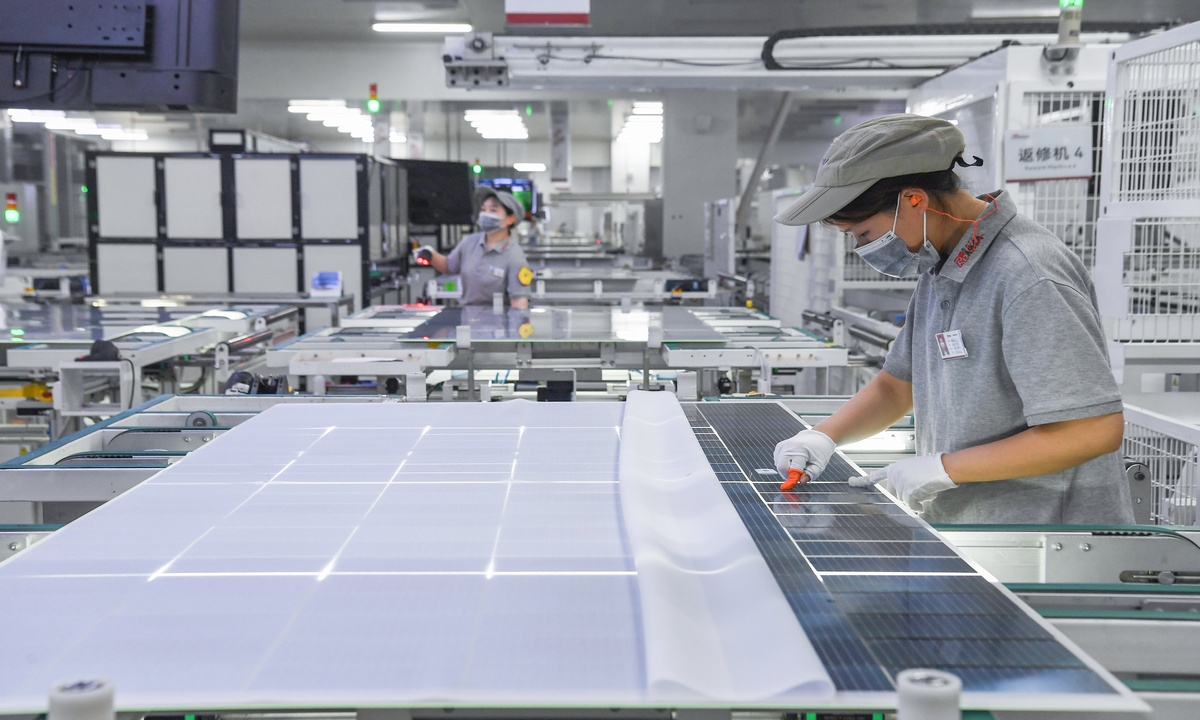
China saw robust exports in electric vehicles (EV), lithium batteries and photovoltaic products, known as the "new three," in the first half of this year. More notably, robotics, artificial intelligence (AI) and innovative drugs, which represent the future direction of industrial development, are also emerging as new calling cards for China's foreign trade.
However, the impressive performance provoked unease among some Western media outlets and politicians. Some have deliberately portrayed China's rapid industrial development and strong competitiveness as a result of government subsidies, pushing the false claim that subsidies have created overcapacity and those low-priced Chinese products are flooding global markets. Such fallacies, which simply equate industrial subsidies with overcapacity, are not only logically flawed but also factually groundless.
In practice, many countries adopt industrial policies tailored to their national conditions and development needs, such as providing research and development (R&D) subsidies for emerging industries and risk related subsidies for agriculture.
Well-designed industrial subsidies can help address market failures, promote technological innovation and environmental protection, reduce poverty and support balanced development, rather than cause so called "overcapacity."
Multiple reports by the United Nations Conference on Trade and Development have noted that the number of industrial policies worldwide has grown rapidly over the past five years, with R&D subsidies, tax incentives and low interest loans for emerging industries becoming common international practices.
Forcibly linking industrial subsidies to "overcapacity" is, in essence, a political manipulation based on double standards. The US, for example, plans to provide $750 billion in various subsidies from 2022 to 2031 under its Inflation Reduction Act. Subsidized EVs are subject to requirements such as production and sales in the US or North America, effectively excluding other WTO members. US industrial subsidies for AI are even greater than those of all other countries combined.
Similarly, according to incomplete statistics, the European Commission is expected to provide more than 1.44 trillion euros ($210 billion) in various subsidies between 2021 and 2030. The EU's Industrial Accelerator Act links local content directly to financial support through "Made in EU" requirements, creating serious investment barriers and institutional discrimination.
Have these massive subsidies been labeled as causing "overcapacity"? The answer is no. While claiming that China's industrial subsidies lead to so-called overcapacity, these countries are themselves providing massive subsidies to their own industries. Such double standards amount to selective accusations targeting China, aimed at politicizing trade and economic issues and weaponizing industrial policy.
At a deeper level, accusations that "China's industrial subsidies cause overcapacity" are merely a pretext, reflecting growing anxiety and fear over the rising competitiveness of Chinese industries.
Looking back at the repeated hype in Western media, the criticism has consistently targeted China's most globally competitive industries, including new-energy vehicles, photovoltaics and power batteries. This exposes the real intention of shifting the blame for their own lagging industrial development onto China while stepping up restrictions against Chinese industries.
China's breakthroughs in these industries have been driven by advances in homegrown technologies, complete industrial and supply chains, and robust market competition, rather than by policy subsidies as some have claimed.
In recent years, China has taken multiple steps to regulate and improve its subsidy policies, from reviewing and correcting inappropriate local subsidies to exploring a unified negative list mechanism for local fiscal subsidies. China applies subsidies equally to all market entities, including foreign invested enterprises, strictly follows WTO rules, and continues to improve the compliance, effectiveness and transparency of its subsidy policies.
Rather than fabricating and hyping baseless claims about subsidies and obsessing over building trade barriers, certain Western media outlets and politicians should focus on addressing their own weaknesses and increasing investment in research and development. They should embrace healthy market competition with an inclusive mindset, promote mutual benefit through greater openness, and win markets and drive progress through genuine innovation.
This was compiled and translated by the Global Times English edition based on an article published in the "Chisu Jinsheng" economic commentary column of the People's Daily on August 10, 2026.
。 Awarapan 2 is turning into one of the most awaited films of 2026. The craze around the first film is still strong, and Emraan Hashmi’s recent cameo in The Ba***ds Of Bollywood has only added more excitement. Now the buzz has grown even further with Shabana Azmi has officially joined the cast. A source revealed, “Shabana Azmi has come on board for Awarapan 2. The role is apt for her and she was more than happy to bag the coveted part. It is an interesting and powerful creative decision by producer Vishesh Bhatt that significantly intensifies the film’s emotional core and conflict. Interestingly, this marks Shabana Azmi’s first ever collaboration with Vishesh Films.” The source also highlighted her fresh pairing with Emraan Hashmi, saying, “Also, Awarapan 2 marks her first on screen pairing with Emraan Hashmi, creating a new and formidable dramatic tension audiences have never seen before. Moreover, the casting is in sync with the trademark Bhatt storytelling ethos anchored in strong performances, morally complex characters and emotionally charged drama.” For now, the makers are keeping the specifics of Shabana Azmi’s role completely secret. The source added, “All the details remain tightly under wraps. The makers are expected to officially reveal it in a few weeks.” With her entry, the film now brings together an interesting mix of Emraan Hashmi, Shabana Azmi and Disha Patani, and more cast announcements may be on the way. Directed by Nitin Kakkar, Awarapan 2 recently completed a long schedule in Bangkok and is expected to finish shooting by January 2026. Set for release on April 3, 2026, the film has now moved beyond being just a sequel and is positioned as a prestige thriller that blends scale, emotion and strong performances, especially with Shabana Azmi joining the project.Also Read: Shabana Azmi Lauds Farhan Akhtar’s Performance in 120 Bahadur。
Current article:http://kmz2dt.mexuanmeixuyaopinzheng.shop/news/20260826_1507.html
Published on:08:12:18
上一篇:*ST长方:会计资料相关案件公安机关正在侦查中,康铭盛正逐步恢复正常生产经营_公司目前_平台 下一篇:楽屋泥棒に“ストーカー的行為”も…盗撮被害告発が拡散、瀬名ひなのが語る「レースクイーンの舞台裏」
我的网站相关阅读
- NASA“好奇号”火星车终于抵达期待已久的含硫酸盐区域
- 台风“沙德尔”已进入24小时警戒线,多部门启动应急响应:8月27日至28日杭温高铁、杭台高铁等部分列车临时停运,8家涉海A级景区全部关停
- 国药控股:上半年归母净利润34.04亿元,同比下降1.80%
- 2换1达成!76人引入湖人冠军成员
- 以“绿”为笔 绘就生态新画卷
- 面对“二选一”战略抉择,泰山队需给出答案
- 김민석 "이진숙, '여자 전두환' 호칭 좋아하시나 보다"
- Two Chinese sailors rescued, 22 missing after Panama-flagged bulk carrier sinks off eastern India’s coast, operation still ongoing: embassy tells GT
- 창원지법에도 ‘폭발물 설치’ 협박 메일…경찰 긴급 수색
我的网站最新文章
- China tightens export controls on dual-use drone items to U.S.
- 炸锅!17岁张本美和连斩国乒3将登顶WTT,未来3年谁能拦住她?
- 华强北:APEC助推中国科技产品热
- 抚顺市举行庆祝中华人民共和国成立75周年升国旗仪式
- 行驶中刹车助力突然失灵 已有22起碰撞起火事故!通用116万辆车被升级调查
- 国乒开始封闭集训!冲击亚运7金
- 《影之刃零》“虚空”惊喜登场:身材引发玩家热议
- BOSS直聘 2026 财年第二财季归母净利润 19.45 亿元,同比增长 173.1%
- 东风日产向车主致歉:因服务器机房电力故障,导致车主APP登录、远程控制等线上功能出现无法使用的情况,目前正在全力抢修
- 卡中国脖子?日本妄想!
- 赖清德万万没想到,首批2架F-16V还没落地,特朗普已经埋下大雷?,兵器观世界,原创 赖清德万万没想到,首批2架F-16V还没落地,特朗普已经埋下大雷?
- “反腐干将”苏林,将上任越南国家主席
- 全省重点水利工程建设有序推进
我的网站随机推荐
- आईबी अफसर की ट्रांसफर रद करने की याचिका खारिज, कैट के समक्ष केंद्र ने मजबूती से रखीं दलीलें
- U18男篮亚洲杯-中国男篮大胜卡塔尔 郝煊18分
- 公司用于光模块的硅透镜、微棱镜、玻璃透镜的进展如何?联创电子回应
- 警方发布零容忍警告,节日期间将严查酒驾和超速
- 中国体育彩票2026年第十三届奥体游泳节火热开赛
- 站稳人民立场 答好“初心之问”
- 摩托罗拉 Moto E22 渲染图曝光,或搭载联发科 Helio G37 芯片_该机_Edge
- 国家统计局:我国消费市场规模稳步扩大、发展质量不断提升
- 射击世界杯韩国站:中国选手包揽男、女飞碟多向冠军
- 政声直达|引进一个龙头 集聚一个产业
- 应急局扎实做好汛期物资储备工作
- 京东商城商品下单后涨价不发货欺骗消费者
- 范·迪塞尔确认《Fast Forever》将于12月开拍